Laboratories
Water Analysis Labs
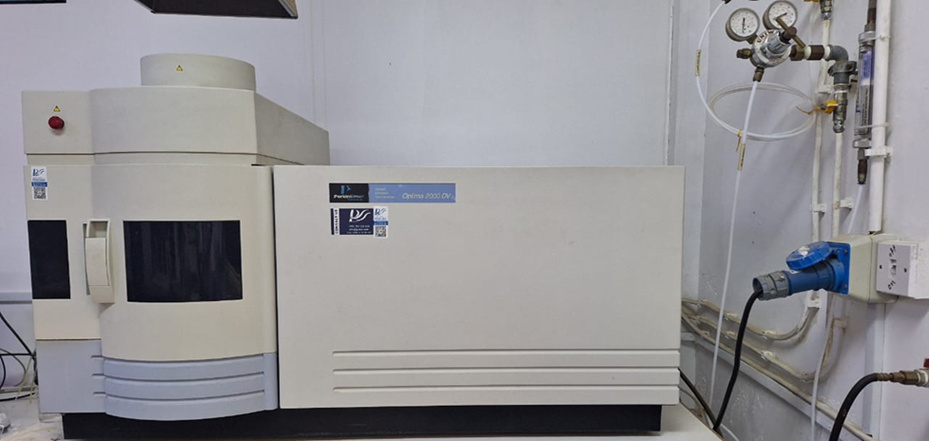
1. Inductively Coupled Plasma (ICP):
ICP is a type of emission spectroscopy that uses inductively coupled plasma (argon in our case) to produce excited atoms and ions that emit electromagnetic radiation at wavelengths characteristic of a particular element. It is used to measure the ppb concentration of most heavy and trace metals found in the periodic table.
2. Atomic Absorption Spectrometer (AAS):
Atomic Absorption Spectrometer (AAS) is a technique used in analysis to determine an element's concentration. Because of its extreme sensitivity, atomic absorption can detect changes in a sample down to parts per million of a gram. The method utilizes the particular light wavelengths that an element absorbs. They line up with the energies required to move electrons from one higher energy level to another. Numerous applications exist for atomic absorption spectrometry in several branches of chemistry. Such as, Clinical analysis, Environmental analysis.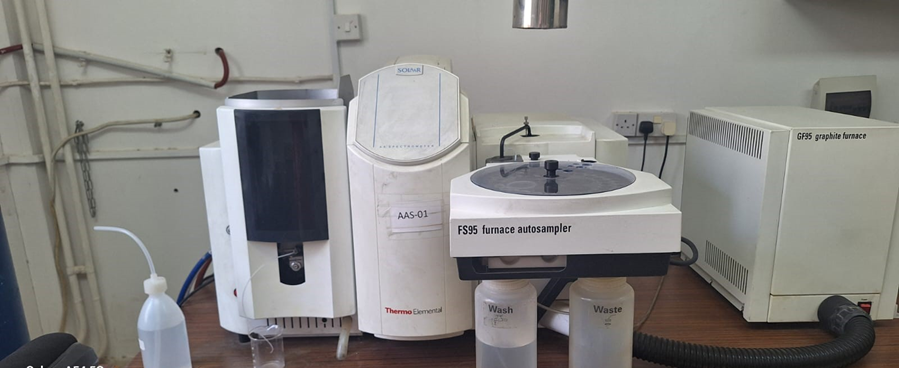
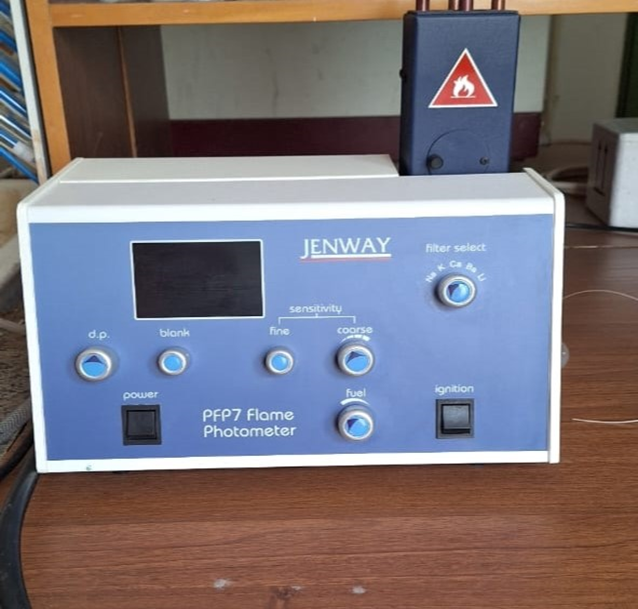
3. Flame photometer:
A flame photometer is a technique used for quantitative elemental analysis. It is particularly useful in measuring alkali and alkaline earth metals, such as sodium, potassium, calcium, and lithium. By subjecting a sample to a flame, the energy provided excites the atoms or ions present, causing them to emit light at specific wavelengths. This emitted light is then measured and correlated to the concentration of the element in the sample.
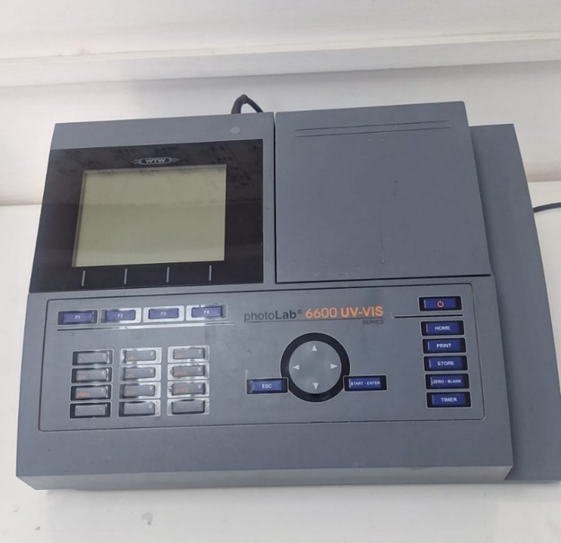
4. Ultraviolet and visible spectrophotometers:
It is symbolized by the abbreviation (UV-Vis) and is a type of spectrometer that is classified under absorption spectroscopy, which occurs in the field of the ultraviolet spectrum and the visible spectrum.
It is used to determine the structural composition of a compound through the absorption of radiation at a specific wavelength, in addition to knowing the concentrations of a large group of positive and negative ions in solutions such as sulfate, phosphate, nitrate, cyanide, chloride, chlorine, etc.
5. Microbiological Analyses
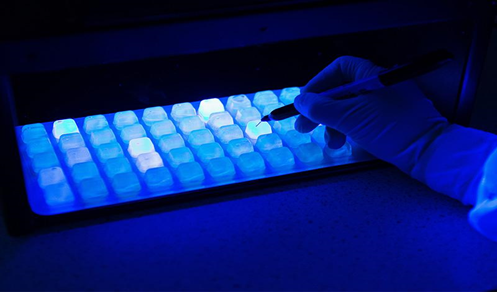
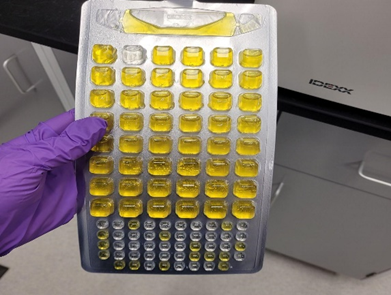
Microbiological tests are conducted on water samples to detect bacterial contamination and assess compliance with health requirements. These tests rely on the IDEXX technique, a laboratory method used to detect microorganisms and quantify their levels using specialized culture media. The water laboratories perform tests for Escherichia coli (E. coli), total coliforms (T.C.), and Pseudomonas aeruginosa.
Rocks, Minerals and Soil Analyses Labs
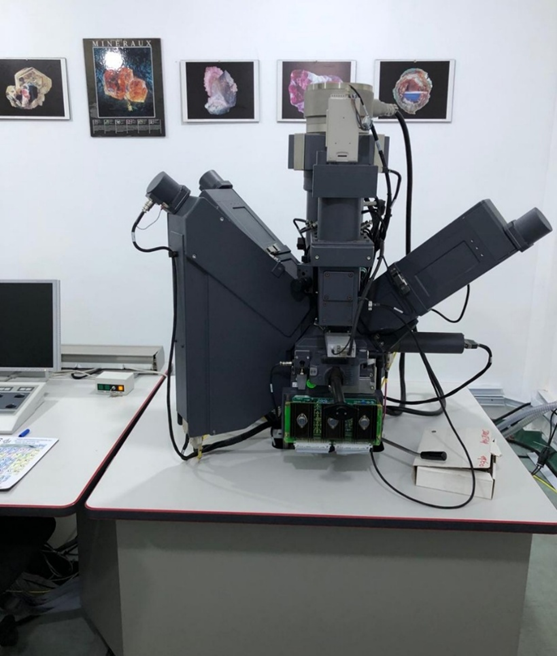
1. Electron Probe Microanalysis (EPMA):
A sensitive and non-destructive technology (< 100 ppm for most elements) used to analyze the chemistry and elemental composition of a very small area (1-3 microns) of any dry solid sample. It focuses an electron beam with an energy of 5–30 keV and is equipped with a full set of tools to Analyze Wavelength-Dispersive Spectroscopy (WDS) and Energy-Dispersive Spectroscopy (EDS) using suitable crystal detectors. It can also identify elements with atomic numbers 4 and above and produce magnified images similar to a scanning electron microscope (SEM). It is used in scientific and engineering applications including geology, materials science, electronics, biology, mechanical and chemical engineering.
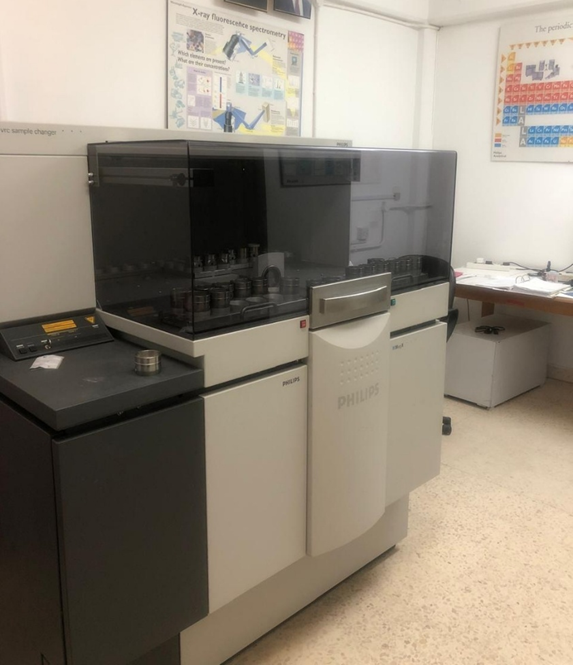
2. X-Ray Fluorescence:
X-ray Fluorescence (XRF) is a non-destructive analytical technique used for elemental analysis. In XRF analysis, a sample is irradiated with high-energy X-rays, which causes the atoms in the sample to emit characteristic X-ray fluorescence. By measuring the energy and intensity of these emitted X-rays, one can identify and quantify the elements present in the sample. XRF is widely employed in various fields, including geology, environmental science, archaeology, and materials science. Its versatility and rapid results make it a valuable tool for determining the elemental composition of a wide range of materials. It is particularly useful for quality control, alloy verification, and monitoring environmental pollutants. XRF analysis is appreciated for its speed and precision, making it an indispensable method for researchers and industries seeking to understand the elemental composition of their samples.
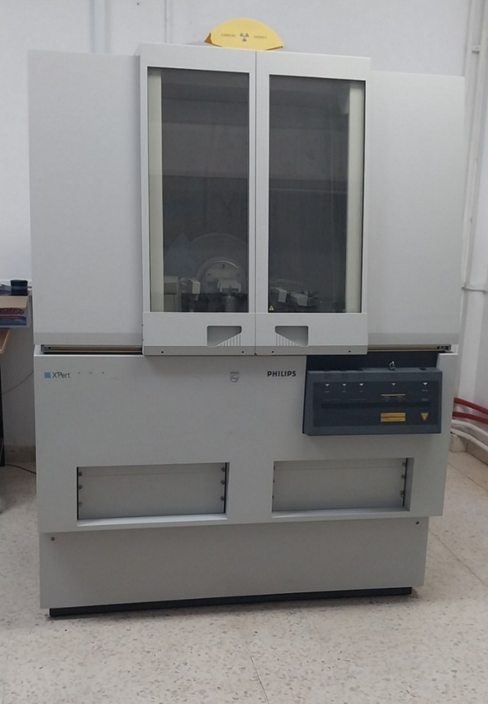
3. X-Ray Diffraction:
X-Ray Diffraction is used to determine the minerals and the chemical composition of any crystalline powder or solid samples. It has a wide range of applications in geology, material science, environmental science, chemistry, and the pharmaceutical industry. Over 200,000 diffraction patterns of known compounds have been compiled into a PDF database, which helps in the determination of the phases present in the sample by modern computer programs through a quick comparison of the diffraction data of that sample to all of the patterns in the database. Analysis using the X-ray powder diffractometer is fast and accurate. A crusher and a mill grinder are used for sample preparation.
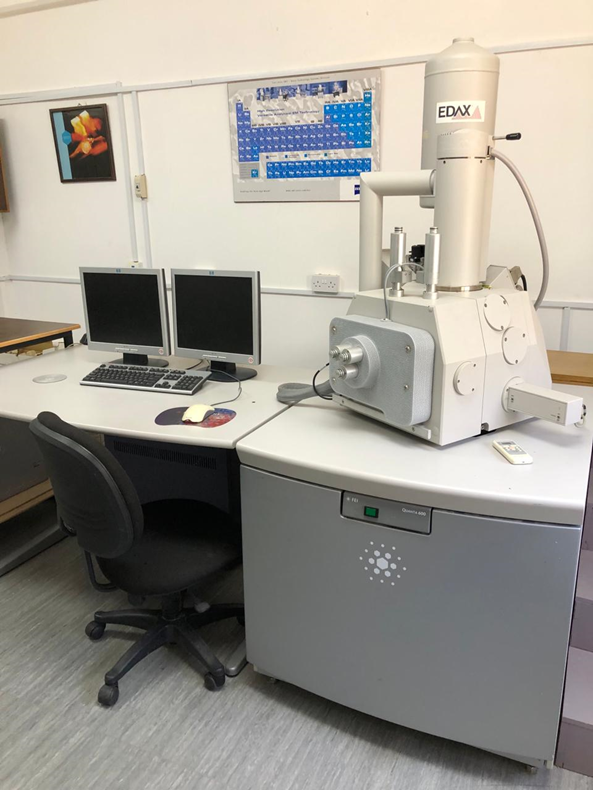
4. Scanning Electron Microscope (SEM):
Scanning Electron Microscope (SEM) is a type of electron microscope that produces images of a sample by scanning the surface with a focused beam of electrons. The electrons interact with atoms in the sample, producing various signals that contain information about the surface topography and composition of the sample.
Organic Materials Analysis Laboratories
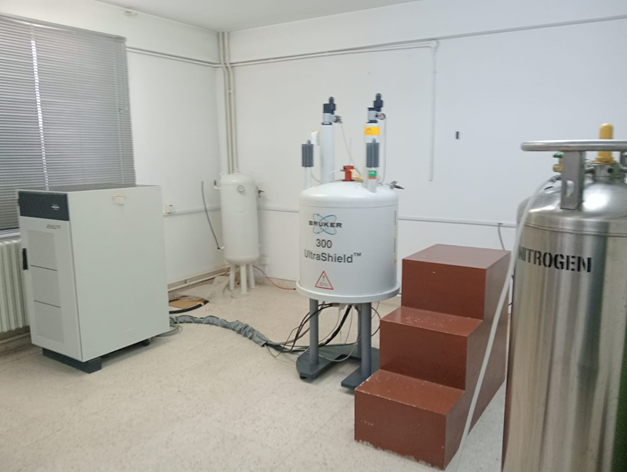
1. Nuclear Magnetic Resonance (NMR) spectroscopy
Nuclear Magnetic Resonance (NMR) spectroscopy is one of the modern analytical techniques used to elucidate the structural formulas and three-dimensional configurations of organic compounds.
NMR spectroscopy is based on the interaction of certain atomic nuclei, such as hydrogen (1H) , Carbon-13 (13C), Fluorine-19 (19 F), and phosphorus-31 (31P), with a strong external magnetic field. These nuclei possess magnetic moments associated with their nuclear spin properties, causing them to behave like tiny magnets. When a sample is placed in a strong magnetic field, the nuclear magnetic energy states split into different energy levels. Upon exposure to electromagnetic radiation in the radiofrequency range, the nuclei absorb energy when the radiation energy matches the energy difference between these levels, resulting in nuclear magnetic resonance. This technique is used to determine the chemical structures of compounds and investigate the chemical environments of nuclei within molecules.
Applications of the Instrument:
1. Elucidation of the structural formulas and three-dimensional configurations of organic compounds.
2. Investigation of the reaction rates of certain chemical compounds.
3. Study of the effects of temperature on various organic compounds and their reactions.
4. Investigation of different nuclei, their positions within molecules, and their interactions with one another.
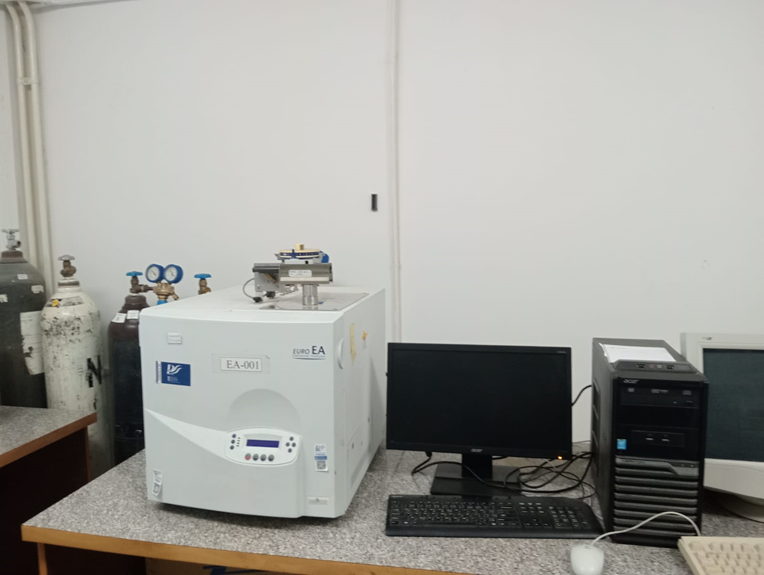
2. Elemental Analyzer
The Elemental Analyzer quantitatively determines the percentages of carbon (C), hydrogen (H), nitrogen (N), sulfur (S), and oxygen (O) in samples, helping characterize their chemical composition and assess purity. Its operating principle is based on sample combustion, which converts the elements into measurable gases and compounds. The combustion products are then analyzed using appropriate analytical techniques, such as gas chromatography. The instrument is widely used in scientific research, organic compound characterization, and quality control across various fields.